|
|
|




|
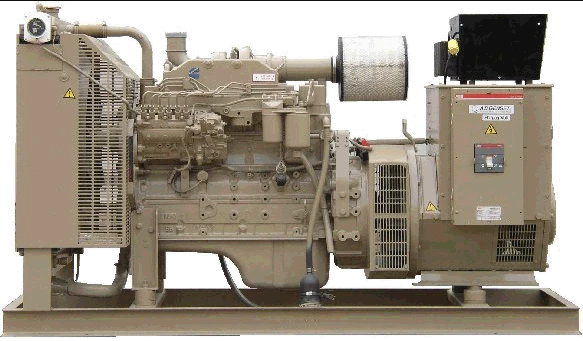
Can you do so? Yes.
Would I do so? Yes.
I would do so for a generator running prime power or one that has longer duty cycle. If you are considering biodiesel be sure to also consider cogeneration. At best a diesel generator converts 35% of available BTU to electricity and the remainder are emitted as heat. This heat can be harnessed and used profitably.
Because long term storage is an issue for biodiesel I would avoid biodiesel for a generator that is rarely used.
Some manufacturers of diesel generator engines may void their warranty or may not cover specific components such as seals, injectors and other components. You may be wise to wait until your warranty coverage has expired.
There are many issues involved. Please read on and follow the links at the left of this page for both pros and cons of powering with biodiesel.
Biodiesel -a more formal definition
Biodiesel fuels are methyl or ethyl esters derived from a broad variety of renewable sources such as vegetable cooking oil and animal fat. Esters are oxygenated organic compounds that can be used in compression ignition (diesel) engines because some of their key properties are comparable to those of diesel fuel.
Biodiesel is produced through a process in which organically derived oils are combined with alcohol (ethanol or methanol) in the presence of a catalyst to form ethyl or methyl ester. Biodiesel can be made from soybean or Canola oils, animal fats, waste vegetable oils or micro algae oils.
Do not confuse biodiesel with biofuels. Biofuels are made from cellulose biomass resources. Biofuels include ethanol, biodiesel and methanol.
A more down-to-earth definition for most of us :
:
Biodiesel is made from fresh or waste vegetable oils (triglycerides) that are a renewable energy source. Biodiesel is an environmentally safe, low polluting fuel which can be used in most diesel internal combustion and turbine engines. Biodiesel can be mixed with petroleum diesel fuel and stored anywhere petroleum is stored. Biodiesel is relatively safe and easy to process when conscientiously approached. Benefits are substantially reduced engine emissions, even with a blend of 20% Biodiesel with 80% petroleum diesel.
Warranty Issues"
"Use of biodiesel does not void a vehicles warranty; this is prohibited by the Magnuson-Moss Warranty Act in the US. (Canada has no such act in place that I am aware of. However, read on! This information applies to you.) Manufacturers recommendations for certain percentage blends of biodiesel are just that, recommendations.
Diesel engine companies warranty the product they make. They warranty their engines for “materials and workmanship.” If there is a problem with an engine part or with engine operation due to an error in manufacturing or assembly within the warranty period, the problem should be covered by the engine company. Typically, an engine company will define what fuel the engine was designed for and will recommend the use of that fuel to their customers in their owner's manuals. Engine companies do not warranty fuel - whether that fuel is biodiesel or petro-diesel fuel.
If there are
engine problems caused by a fuel, these problems are not related to the
materials or workmanship of the engine, but are the responsibility of the fuel
supplier and not the engine manufacturer. Concerned biodiesel users should
consult their warranty statement. "
The shelf life of biodiesel most commonly quoted is six months, after which time the fuel should be re-tested. If you are keeping biodiesel in translucent containers for long periods, it is a good idea to put a tarpaulin over the container/s to keep the light out.
Biodiesel fuels are produced by a process called transesterification, in which various oils (triglycerides) are converted into methyl esters through a chemical reaction with methanol in the presence of a catalyst, such as sodium or potassium hydroxide. The by-products of this chemical reaction are glycerols and water, both of which are undesirable and need to be removed from the fuel along with traces of the methanol, un-reacted triglycerides and catalyst. Biodiesel fuels naturally contain oxygen, which must be stabilized to avoid storage problems.
There are many recipes and techniques published on the web describing how to make biodiesel. Essentially the process is one of removing the glycerine from the vegetable oil and replacing it with alcohol.
Making Biodiesel
http://www.biodieselcommunity.org/
http://www.greenfuels.org/bioindex.html
http://www.webconx.com/making_biodiesel.htm
http://journeytoforever.org/biodiesel_make.html
General Biodiesel information:
http://www.biodiesel-canada.org/
Canadian Renewable Fuels Association
http://www.federalsustainability.org/initiatives/biodiesel.htm
http://www.biodieselcommunity.org/bubblewashingbiodiesel/
Other resources and discussion groups :
http://www.egroups.com/group/Biodiesel/
http://biodiesel.tribe.net/
Articles and in-the-news"
http://www.cbc.ca/consumers/market/files/cars/biodiesel/
http://www.mirabilis.ca/archives/000531.html
DISCLAIMER: This information is provided only as a service to our customers, for general education and to assist our customers to be able to make their own decision. If your biodiesel comes from your local fuel distributor ask them for more information. STRATEnerGY are not expert in various fuel types and biodiesel compositions. We at STRATEnerGY recommend using ONLY standard or agricultural grade Diesel #2 within your generator set, and assume NO responsibility or liability of any type resulting from any decision you might make to use any fuel other than standard or agricultural grade Diesel #2 within your diesel generator set.
|
Contact Us:
Telephone: toll free at 1-
Parry
Sound,Northern
Ontario,Muskoka and Georgian Bay
Ontario,Canada
© Copyright 2013, STRATEnerGY Inc.™
All Rights Reserved
Caribbean and US |